


Women need more than estrogen and progesterone support during menopause. Hormone changes can cause low energy and weight gain. They can also affect sleep, mood, and bone health. Many women use peptide therapy, healthy meals, exercise, stress support, and hormone tests to improve hormone balance, support daily health, and help the body age in a healthier way.
Vita Bella helps women support hormone health during menopause and perimenopause with personalized wellness plans. Your care plan may include hormone testing, peptide therapy, healthy food guidance, and simple lifestyle support. These treatments may help improve sleep, recovery, metabolism, and daily wellness. With the right support, women may feel stronger, healthier, and more active as they age.
How Does Women’s Hormone Optimization Support Perimenopause and Menopause Symptoms?
Women’s hormone optimization may help more than hot flashes and night sweats. During menopause, hormone changes can lower energy and slow metabolism. They can also affect sleep, mood, memory, and bone health. Many women also notice weight gain and low stamina. A personalized plan may help improve daily health, strength, and long-term wellness.
A personalized hormone optimization plan may support:
Better energy
Lean muscle support
Improved sleep
Healthy metabolism
Better mood
Stronger bones
Mental focus
Exercise recovery
Lower estrogen levels may affect muscle strength and blood sugar balance. Because of this, many women gain belly fat more easily during menopause. Stress can also raise cortisol levels. High cortisol may increase fatigue and poor sleep. Therefore, healthy meals, regular exercise, stress support, and quality sleep remain important for hormone balance.
According to a study published in the National Library of Medicine [1], menopause causes major hormone changes during midlife. These changes may affect body fat, muscle health, and bone strength. Studies also show that healthy lifestyle habits and personalized hormone support may help women maintain mobility, strength, and better overall health as they age.
Can Peptide Therapy Support Female Metabolism, Energy, and Healthy Aging?
Peptide therapy may help women during menopause and perimenopause. Some peptides may support energy, sleep, and physical recovery. Others may help with appetite and blood sugar balance. Because of this, peptide therapy may help women with weight gain and low stamina. However, healthy daily habits and medical guidance still remain important.
Potential Benefits of Peptide Therapy for Women
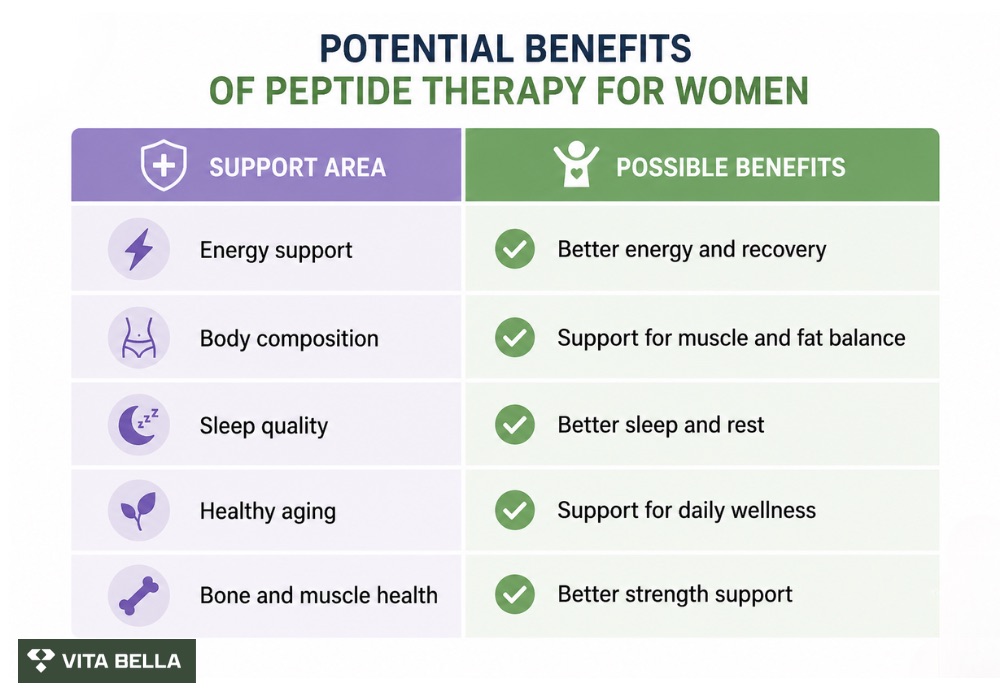
Some peptides may support energy, exercise performance, and overall wellness during menopause. Certain therapies may also help with appetite control and metabolic function. As a result, some women may notice better sleep, improved recovery, and healthier body balance. However, progress can vary based on hormone levels, lifestyle habits, age, and overall health.
Growth hormone secretagogues may encourage the body to produce more natural growth hormone. Because of this, some women may experience stronger recovery and better physical performance. Metabolic peptides may also support body composition and daily energy levels. These therapies may help women who experience fatigue and slower metabolism during menopause.
Importance of Medical Guidance and Healthy Habits
Peptide therapy does not work the same for every woman. Menopause affects each body differently. Therefore, proper testing and medical supervision remain important before treatment begins. Daily habits also play a major role in long-term results. Healthy meals, exercise, stress support, and proper sleep may help improve hormone balance and overall wellness.
Peptides cannot replace healthy lifestyle habits. Instead, they may work best as part of a complete hormone wellness plan. Research published in the New England Journal of Medicine [2] shows that growth hormone levels may decline with age. This change may increase body fat and lower muscle mass. The study also showed improved body composition after growth hormone support in older adults. Healthy habits and medical support may help improve strength, recovery, and healthy aging.
Which Lifestyle Strategies Improve Hormone Balance and Metabolic Health for Women?
Healthy habits may help women during menopause and perimenopause. Good food, regular exercise, stress control, and proper sleep may support energy and mood. These habits may also help support metabolism and daily health. Protein-rich foods may help support muscles. Fiber-rich foods may also help support digestion and blood sugar control.
Research published in Osteoporosis International [3] shows that regular exercise may help improve bone strength and density after menopause. Studies also show that strength training may support muscle health and movement during aging.
Why Is Personalized Hormone Testing Important for Women’s Health Optimization?
Personalized hormone testing may help find the cause of symptoms during menopause and perimenopause. Low energy, weight gain, mood changes, and poor sleep may involve several body systems at once. Hormone testing may check cortisol levels, thyroid health, blood sugar balance, and vitamin levels. Testing may help create more accurate and personalized treatment plans for women.
Research published in the International Journal of Obesity [4] shows that menopause may lower energy use and fat burning. These changes may increase body fat and slow metabolism over time. The study also suggests that healthy lifestyle habits may help reduce these effects. Therefore, regular exercise, healthy food, stress control, and proper sleep may support better hormone health and long-term wellness during menopause.
Take Control of Your Hormone and Long-term Health
You may feel tired more often during menopause and perimenopause. Poor sleep, weight gain, mood changes, and low energy may affect your daily life. Hormone changes may also slow your metabolism and lower your confidence. Because of this, many women struggle to stay active, focused, and healthy during this stage of life.
Vita Bella offers personalized hormone support for women during menopause and perimenopause. Your treatment plan may include hormone testing, peptide therapy, metabolic support, healthy nutrition, and lifestyle guidance designed for your body’s needs. These strategies may help improve energy, recovery, metabolism, and long-term wellness. Contact us today to learn more about personalized hormone wellness and long-term health support.
Frequently asked questions
Yes, menopause may affect heart health over time. Lower estrogen levels may increase LDL cholesterol and body fat. Because of this, some women may face a higher risk of heart disease after menopause. Healthy food, exercise, stress control, and regular health testing may help support better heart and metabolic health during aging.
Perimenopause symptoms may last for several years before menopause begins. Many women notice changes in sleep, mood, energy, and menstrual cycles during this time. However, each woman experiences menopause differently. Healthy lifestyle habits and personalized hormone support may help manage symptoms and improve daily wellness during the transition.
Yes, poor sleep may worsen many menopause symptoms. Lack of sleep may increase fatigue, mood changes, brain fog, and stress levels. It may also affect metabolism and recovery. Therefore, healthy sleep habits may play an important role in hormone balance, energy support, and long-term wellness during menopause and perimenopause.
Yes, strength training becomes more important after menopause. Muscle mass and bone strength may decrease with age and hormone changes. Regular resistance exercise may help support balance, mobility, metabolism, and daily strength. In addition, strength training may help women stay more active and support healthier aging over time.
Yes, hormone changes during menopause may affect digestion and gut health. Some women notice bloating, slower digestion, or changes in appetite during this stage. Stress and poor sleep may also affect gut function. Therefore, fiber-rich foods, hydration, movement, and healthy daily habits may help support better digestive health and wellness.
Not always. Some women improve with healthy food, exercise, stress support, and better sleep alone. However, others may continue to struggle with fatigue, weight gain, or poor recovery. In these cases, personalized hormone support, metabolic care, or peptide therapy may provide additional help when guided by a medical professional.