GLP-1 male fertility research is now consistent. A 2025 meta-analysis by Salvio et al. found these medications raise testosterone by 1.39 ng/mL on average, improve LH and FSH, and can restore normal sperm counts in some obese men. These are not dedicated fertility drugs, but their metabolic effects create the hormonal conditions male reproduction requires. Men exploring this can start with Vita Bella's testosterone and hormone therapy, where a licensed provider reviews your labs before any protocol begins.
How GLP-1 medications affect male health
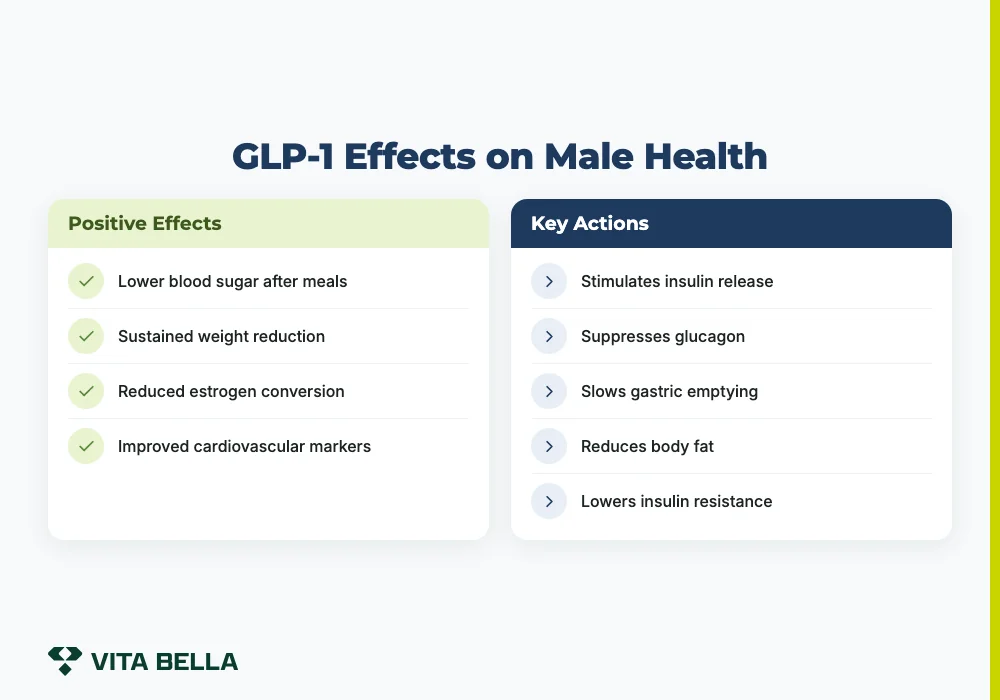
GLP-1 receptor agonists are approved for type 2 diabetes and obesity. They mimic the natural incretin hormone GLP-1, which the gut releases in response to food, and produce several effects relevant to male reproductive health:
- Glucose regulation: they stimulate insulin release and suppress glucagon, lowering blood sugar after meals.
- Appetite suppression: slowed gastric emptying and central satiety signals support sustained weight reduction.
- Fat mass reduction: a 2024 systematic review by Kommu et al. in Obesity Reviews confirmed meaningful weight loss with once-weekly subcutaneous semaglutide in overweight and obese adults without diabetes.
- Hormonal correction: as body fat drops, aromatase activity decreases, reducing the conversion of testosterone to estrogen and allowing natural testosterone levels to recover.
- Cardiometabolic improvement: lower insulin resistance and systemic inflammation improve cardiovascular markers alongside weight loss.
Each of these effects compounds on the hormonal environment that sperm production depends on. That is why GLP-1 male fertility research consistently points in a positive direction for obese men.
Does obesity cause low sperm count?
Yes. Obesity damages male fertility through a direct hormonal pathway. Adipose tissue contains high concentrations of aromatase, which converts testosterone into estrogen. Obese men typically show elevated estrogen, suppressed free testosterone, and reduced LH and FSH, the pituitary signals that drive sperm production.
The downstream effects on semen are measurable. Higher BMI consistently associates with lower sperm concentration, reduced motility, and more abnormally shaped sperm. Obesity male infertility is a metabolic problem before it is a reproductive one.
A 2024 review in Frontiers in Physiology by Du Plessis, Omolaoye, and Cardona Maya identified metabolic correction as the foundational step for GLP-1 male fertility improvement, noting that GLP-1 receptor agonists can accomplish that correction in men with obesity-driven hormonal suppression.
Can GLP-1 help with low testosterone?
Yes. A 2025 meta-analysis by Salvio et al. found a statistically significant testosterone increase of approximately 1.39 ng/mL in men treated with GLP-1 receptor agonists, alongside improved LH and FSH. A separate 2025 systematic review by Raheem et al. confirmed that liraglutide, semaglutide, and dulaglutide all raised total testosterone meaningfully in obese men. The largest effects appeared in those with the most severe baseline suppression.
Semaglutide testosterone gains in men come from reducing the fat mass that was suppressing natural production, not from direct hormonal stimulation. Unlike testosterone supplementation, which the 2018 Endocrine Society clinical practice guideline by Bhasin et al. identifies as a treatment that suppresses spermatogenesis, GLP-1 therapy improves testosterone without interfering with natural sperm production. That distinction matters for men who want hormonal recovery while preserving fertility capacity.
Men who want context on their hormone numbers before and after treatment can benefit from reading hormone labs beyond standard reference ranges, since a result listed as "normal" often misses the functional decline that affects how men feel and perform.
Does GLP-1 improve sperm count?
Yes. The most direct evidence comes from a 2025 study presented at the AUA Annual Meeting. Researchers examined nearly 4,000 men with abnormal sperm parameters and compared those prescribed GLP-1 receptor agonists against an untreated control group. Three percent of treated men achieved normal sperm counts, a result not seen in the control group.
The absolute risk difference was +2.8% (P = .001), and the finding held after controlling for BMI, diabetes, and other confounders.
GLP-1 sperm count improvements in that dataset were specific to concentration. Sperm motility showed minimal change (absolute risk: -0.4%, P = .805). That pattern suggests the GLP-1 benefits for men center on the hormonal and metabolic environment around sperm production, not on sperm movement directly. Improving motility appears to require structured lifestyle changes alongside medication.
GLP-1 male fertility outcomes: medication plus lifestyle changes
Medication alone produces modest gains. Research presented at AUA 2024 found that men who combined GLP-1 therapy with structured diet and exercise saw larger improvements in sperm concentration, motility, and testosterone than those relying on medication alone. Du Plessis et al. (2024) identified metabolic correction as the core mechanism and noted that lifestyle co-interventions are needed to maximize reproductive outcomes.
The rationale is direct. GLP-1 therapy drives fat reduction and metabolic correction. Exercise independently reduces the inflammatory markers that impair semen quality and improves testicular blood flow. Diet reinforces weight loss and supports the hormonal environment that medication alone only partially restores.
Semaglutide sperm health data is the most mature for this combined approach. Tirzepatide fertility research is still limited, though tirzepatide adds GIP receptor activity to GLP-1 agonism and produces greater average weight reduction in clinical trials. Larger fat mass reduction should translate to stronger testosterone recovery.
Men losing body fat on GLP-1 treatment should also consider how lean muscle responds during caloric restriction, since muscle loss during weight reduction affects metabolic rate and long-term hormonal outcomes independently of fertility.
Start your evaluation
GLP-1 male fertility research supports a clear benefit for men with obesity-related hormone suppression and poor semen parameters. At Vita Bella, a licensed provider determines the right approach after reviewing your labs, weight history, and reproductive goals together.
Frequently asked questions
Yes. Semaglutide, tirzepatide, and other GLP-1 receptor agonists are commonly prescribed to men for obesity and type 2 diabetes management. Research confirms multiple GLP-1 benefits for men, including improved testosterone, better gonadotropin levels, and measurable sperm count gains in obese individuals. A licensed provider evaluates eligibility based on health history and lab results.
Yes, positively. Semaglutide sperm health research shows improvements in sperm count and testosterone in obese men, with no evidence of harm to natural hormone production. The effect is partial when medication is used alone, and combining semaglutide with structured diet and exercise produces stronger and more sustained fertility improvements.
Yes. Evidence from a 2025 AUA study confirms that GLP-1 sperm count improvements are real: 3% of treated men with abnormal sperm parameters achieved normal counts, versus none in the control group. The benefit was concentrated in sperm concentration rather than motility, and results were most pronounced in men with significant obesity.
Yes. Two 2025 systematic reviews found that GLP-1 receptor agonists raise total testosterone in obese men by reducing the aromatase-driven conversion that suppresses natural production. The gain does not interfere with the body's natural hormonal signaling, making GLP-1 therapy a useful option for men with obesity male infertility who want hormonal recovery without compromising their reproductive capacity.
Sources
- Salvio G et al. (2025). Effects of glucagon-like peptide 1 receptor agonists on testicular dysfunction: A systematic review and meta-analysis. Andrology. PubMed
- Raheem O et al. (2025). Effects of GLP-1 receptor agonists on testosterone levels and semen parameters in men: A systematic review. Urology. ICS Abstract
- AUA Annual Meeting (2025). GLP-1 RAs could improve sperm count in overweight men. Urology Times. Urology Times
- Du Plessis SS, Omolaoye TS, Cardona Maya WD (2024). Potential impact of GLP-1 receptor agonists on male fertility: a fable of caution. Frontiers in Physiology. ResearchGate
- Kommu S et al. (2024). Efficacy and safety of once-weekly subcutaneous semaglutide on weight loss in patients with overweight or obesity without diabetes mellitus. Obesity Reviews. PubMed
- Bhasin S et al. (2018). Testosterone therapy in men with hypogonadism: An Endocrine Society clinical practice guideline. The Journal of Clinical Endocrinology and Metabolism. PubMed