











Safe peptide cycling helps your body respond better over time. It may lower the risk of peptide tolerance and receptor fatigue. Short breaks between cycles give your body time to recover. In addition, regular health monitoring helps track progress and safety. With proper provider guidance, peptide cycling may support better fat loss, recovery, and healthy aging results.
Vita Bella offers peptide wellness plans based on your goals and health needs. These plans may include peptide cycles, nutrition support, recovery care, and regular health checks. Provider guidance may also help improve safety during treatment. This approach may support better fat loss, recovery, energy, and healthy aging results over time.
Why Are Safe Peptide Cycling Protocols Important for Preventing Peptide Tolerance?
Safe peptide cycling helps your body respond better over time. Using peptides without breaks may lower their effects. Receptors can become less active after constant use. Planned breaks are important. These breaks may support recovery, fat loss, and healthy aging. They may also lower stress on your hormones and metabolism. Several factors help support safe and effective peptide cycling. These steps may also help your body recover more efficiently during treatment.
Short breaks may help receptors recover.
Cycling periods may support hormone balance.
Blood tests help track your health and progress.
Good nutrition will optimize peptide results.
Provider guidance helps improve safety when using peptides.
Research shows that constant receptor stimulation may reduce treatment response over time. This process is called receptor desensitization. Studies also show that recovery periods may help receptors function more normally again. The review Current Molecular Pharmacology [1] explains how recovery phases may support receptor health and long-term treatment response.
What Are the Best Peptide Cycling Schedules for Fat Loss, Recovery, and Anti-Aging?
The best peptide cycle depends on your goals and health. Some peptides work best in short cycles. Others need longer use with short breaks. Treatment plans should match your body’s needs. Proper cycling may support fat loss, recovery, energy, and healthy aging. It may also help your body respond better over time.
Common Peptide Cycling Approaches for Different Goals
Different peptides do different things. Some support fat loss. Others help with recovery, energy, or healthy aging. Because of this, cycle plans may change from person to person. Providers often adjust peptide use based on your health, goals, and results. These schedules may help keep your treatment more balanced. They may also help providers check your progress and make safer changes when needed.
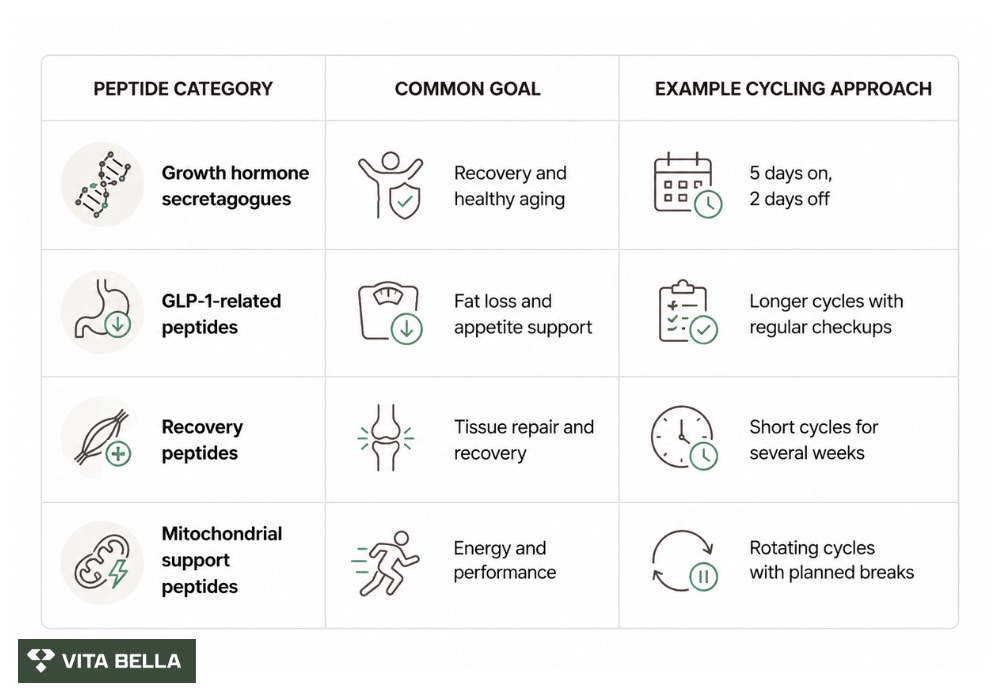
Recovery Periods and Peptide Balance
Recovery periods are important in peptide therapy. Using peptides for too long may lower their effects. Because of this, many plans include short breaks. These breaks may help support recovery and hormone balance. For example, BPC-157 often appears in short recovery plans. Meanwhile, CJC-1295 and Ipamorelin may benefit from planned breaks to support the hormone response. Providers may also check appetite, insulin levels, body composition, and recovery progress during treatment.
Individual Monitoring and Long-Term Results
A good peptide plan focuses on balance instead of constant use. Regular checkups help providers adjust treatment based on your response and health goals. In many cases, planned recovery periods may yield safer, more stable results over time. Research in the National Library of Medicine [2] on growth hormone secretagogues shows that these compounds may increase natural growth hormone release patterns. Studies also suggest that treatment timing and planned use may affect hormone response over time. The review explains how monitored peptide therapy may support recovery and healthy aging more safely.
How Do Peptide Rotation Strategies and Biomarker Monitoring Improve Long-Term Results?
Peptide rotation may help your body respond better over time. Providers may switch between different peptides during treatment. This may help lower stress on the same body systems. Biomarker testing also helps track your health. These tests may help providers make safer treatment changes early.
Providers often check blood sugar, insulin, sleep, inflammation, and body fat during peptide therapy. These checks show how your body responds to treatment. They may also help providers adjust your peptide plan when needed. In contrast, many online peptide plans ignore important health factors. This may raise safety risks during long-term use.
Research shows that biomarkers help track health changes during treatment. Studies also show that regular testing may support safer and more personalized care. The review in BioMed Research International [3] explains how biomarkers help monitor metabolic health during long-term treatment.
Why Does Nutrition Support Matter During Peptide Therapy Cycles?
Nutrition support helps your body during peptide therapy. Good food may help with recovery, muscle repair, and energy. It may also support hormone balance. Peptides do not work by themselves. Daily habits also affect your results. Therefore, healthy meals, enough water, good sleep, and regular exercise are important during treatment.
Your nutrition needs may change during peptide cycles. Fat loss plans are not the same as recovery or healthy aging plans. Poor nutrition may lead to low energy and slower recovery. Exercise and Sport Sciences Reviews [4] explains that protein, amino acids, exercise, and balanced meals help support muscle repair and strength. The review also shows that good nutrition may help support muscle health and metabolism during long-term wellness programs.
Start a Personalized Peptide Cycling Plan for Safer Long-Term Results
You may feel disappointed when peptide results slow down over time. Low energy, slow recovery, or poor fat loss may also affect your progress. Many online peptide plans ignore your health needs and recovery ability. Because of this, you may struggle to achieve consistent, safe results over the long term with peptide use.
Vita Bella offers personalized peptide wellness support based on your goals and health needs. Provider-guided plans may include peptide products, cycling schedules, biomarker testing, nutrition support, and recovery guidance. This approach may help achieve safer, more stable long-term results. To learn more about personalized peptide care, contact us at (480) 602-0444 today.
FAQs
Can You Build Peptide Tolerance Faster With High Doses?
Yes, high peptide doses may increase the risk of peptide tolerance over time. Constant overstimulation may reduce receptor response and lower treatment effects. Because of this, many providers use lower starting doses and planned breaks. This approach may help support safer long-term recovery, fat loss, and healthy aging results.
How Long Should You Stay Off Peptides Between Cycles?
The length of peptide breaks depends on your goals, health, and the type of peptide. Some people may need short breaks lasting days. Others may need longer recovery periods between cycles. Providers often adjust these schedules based on recovery, hormone balance, and treatment response to help support safer long-term results.
Can Poor Sleep Reduce Peptide Therapy Results?
Yes, poor sleep may lower the benefits of peptide therapy. Sleep supports hormone balance, muscle repair and recovery, and metabolic health. Low sleep quality may also increase stress and fatigue during treatment. Therefore, many peptide wellness plans include sleep-support strategies to improve long-term recovery and treatment response.
Are At-Home Peptide Protocols Safe Without Medical Supervision?
At-home peptide use without provider guidance may increase safety risks. Many online protocols ignore health history, medications, hormone balance, and metabolic health. As a result, treatment problems may go unnoticed. Provider supervision and regular health checks may help support safer peptide use and more personalized long-term treatment planning.
Can Exercise Improve Results During Peptide Therapy Cycles?
Yes, regular exercise may help improve the results of peptide therapy. Strength training and recovery-focused movement may support muscle repair, energy, metabolism, and body composition. Exercise may also help support healthy hormone function during treatment. Therefore, many providers combine peptide therapy with structured movement and recovery plans.
What Signs May Suggest Your Peptide Cycle Needs Adjustment?
Some signs may show that your peptide cycle needs changes. These may include low energy, poor recovery, sleep problems, appetite changes, or slower results over time. In some cases, hormone or metabolic changes may also occur. Regular monitoring may help providers adjust treatment before these problems become more serious.