Feeling hot while sleeping is a signal that your body's temperature regulation process has stalled. Your core temperature should drop in the evening, triggering the onset of deep sleep. When that cooling fails, you wake up sweating, restless, and unrefreshed. The causes range from a too-warm bedroom to hormonal shifts that disrupt your internal thermostat. For many adults experiencing persistent night sweats, a review of hormone health with a licensed provider is the clearest next step.
Why does my body get so hot when I sleep?
Your body gets hot during sleep when the natural drop in core temperature is blocked or disrupted. The hypothalamus normally signals blood vessels near the skin to dilate each evening, releasing heat outward and lowering core temperature in preparation for sleep. A 2001 study in The Journal of Physiology confirmed that this circadian-driven thermoregulation is essential for sleep onset and maintenance: when heat dissipation is blocked, even slightly, sleep onset delays and nighttime awakenings increase.
The hypothalamus functions as your internal thermostat. It reads input from hormone levels, ambient temperature, and nervous system activity, then adjusts heat production and release accordingly. Disrupt any one of those signals and you end up hot while sleeping, even in a reasonably cool room.
This is why night sweats causes are often layered. A single warm night is forgettable. Months of waking up drenched suggest something systemic, and that distinction determines the right fix.
Common causes of overheating during sleep
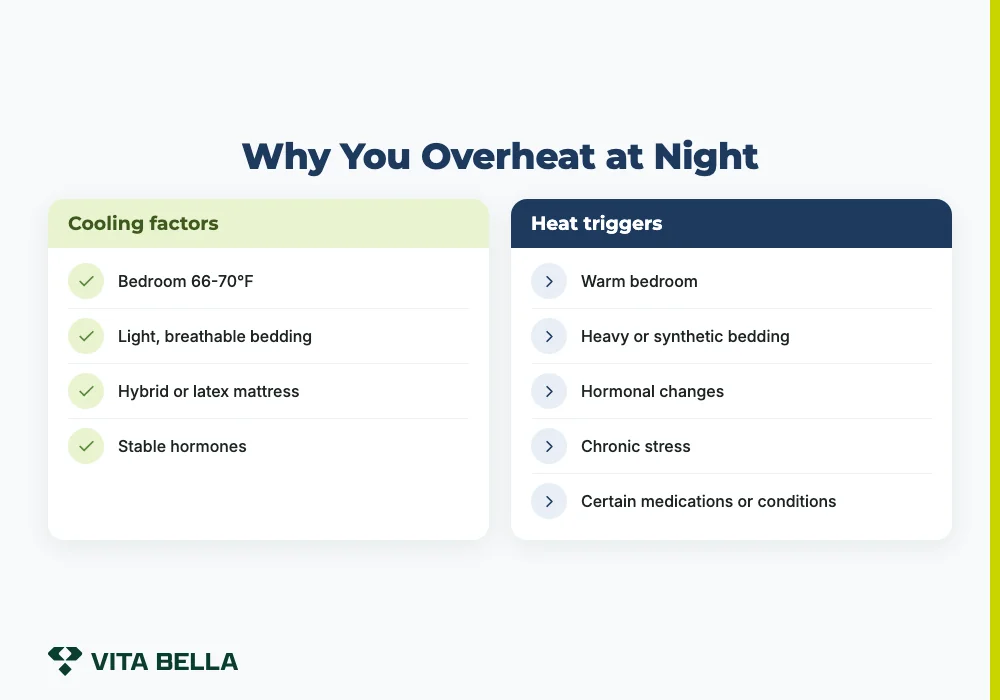
Finding the right remedy starts with identifying the root cause. The table below maps the most common triggers to the physiological mechanism behind each one.
| Cause | Why it generates heat |
|---|---|
| Warm bedroom | Skin cannot shed heat into the environment, blocking the body's natural cooling arc |
| Synthetic or heavy bedding | Traps moisture and insulates the body, raising skin temperature |
| Hormonal changes | Estrogen or testosterone shifts disrupt the hypothalamic thermostat |
| Chronic stress | Activates the sympathetic nervous system, elevating core temperature and sweat output |
| Medical conditions | Thyroid dysfunction, sleep apnea, and infections all impair heat regulation |
| Medications | SSRIs, steroids, and certain hormone therapies increase nighttime sweating |
| Stimulants and alcohol | Raise metabolic heat or dilate blood vessels, increasing body temperature at night |
Your bedroom environment
A room that stays above 70°F through the night consistently delays deep sleep. Research published in the Journal of Physiological Anthropology found that maintaining bedroom temperature between 19–21°C (66–70°F) supports both thermal comfort and sleep quality. Rooms above that range delayed the onset of deep sleep stages and increased nighttime wakefulness, while cooler environments promoted stable thermoregulation and more restorative sleep cycles.
Mattress materials also affect whether you end up hot while sleeping. Dense foam retains body heat against the sleep surface. Hybrid designs with open-coil layers or natural latex tend to dissipate heat more effectively, keeping surface temperature closer to that of the surrounding room. The difference between a heat-retaining foam mattress and a ventilated hybrid can be several degrees at skin level.
Humidity compounds both problems. High relative humidity reduces evaporation at the skin surface, one of the primary ways your body sheds excess heat. A cool room can still feel oppressive if the air is saturated.
Bedding and sleepwear
Heavy blankets and synthetic fabrics trap excess heat and moisture next to the skin. A controlled study by Tokura and Kishi found that subjects sleeping in breathable cotton or linen experienced lower skin humidity, fewer nighttime awakenings, and better slow-wave sleep than those in synthetic materials. The difference came down to whether the fabric allowed moisture and air to move away from the skin.
Choosing lightweight, natural-fiber sheets, such as cotton, linen, or bamboo, is among the most accessible sleeping hot remedies. No equipment is required, and the impact on skin temperature and comfort is immediate.
Medications and substances
Several medications disrupt thermoregulation directly. SSRIs are among the most documented: a clinical review found that up to 22% of patients taking them reported night sweats, a rate high enough to be considered a class effect rather than a rarity. Steroids and certain hormone therapies carry similar associations.
Lifestyle substances add to the heat load. Alcohol dilates blood vessels and raises body temperature even as it impairs sleep architecture. Caffeine and spicy food in the hours before bed extend the period when metabolic heat is elevated. If night sweats began around the same time as a new prescription, that timing is worth raising with the prescribing provider.
Stress and your internal thermostat
Chronic stress activates the sympathetic nervous system, raising heart rate, stimulating sweat glands, and disrupting stable thermoregulation at night. A 2022 study in the Journal of Sleep Research found that men with chronic insomnia showed disruptions in the hypothalamic-pituitary-adrenal (HPA) axis, a pathway that governs the body's response to both psychological and thermal stress. In practical terms, a stress system running in overdrive makes it harder for the hypothalamus to hold a stable sleep temperature. No bedding change resolves that underlying problem.
What causes overheating at night in women?
Night sweats in women most often trace back to hormonal changes, particularly the fluctuating and declining estrogen levels of perimenopause and menopause. Estrogen acts on the hypothalamus to hold core temperature within a stable band. As estrogen falls, the hypothalamus becomes hypersensitive to small temperature signals, triggering sudden heat bursts, known as hot flashes, during the day and night sweats during sleep.
Research published in Climacteric confirms that declining estrogen levels significantly contribute to these vasomotor symptoms, which directly interrupt sleep quality and duration. Women in perimenopause may experience overheating during sleep years before their final period. That timing makes the hormonal connection easy to miss when no other obvious signs of menopause have appeared.
Getting hot while sleeping is one of the most disruptive perimenopausal symptoms for this reason. The bedroom feels like the problem. The driver is in the hypothalamus.
Other hormonal and systemic causes of night sweats in women include:
- Thyroid dysfunction: both overactive and underactive thyroid alter the rate of metabolic heat production, pulling body temperature at night out of its normal rhythm
- Pregnancy: elevated progesterone and greater blood volume raise baseline body temperature throughout all trimesters, making nighttime overheating common
- Anxiety and HPA axis dysregulation: persistent stress activation raises nighttime temperature through the same sympathetic pathway active in acute stress
- Autoimmune conditions: inflammation from certain autoimmune disorders can dysregulate body temperature independent of hormonal factors
When night sweats in women are frequent and disruptive, environmental adjustments alone rarely resolve them. A full hormonal panel gives a clearer picture of what is driving the problem.
Is it normal to feel hot at night without a fever?
Yes, feeling hot at night without a fever is common. Body temperature naturally rises and falls in cycles throughout the night as part of normal sleep staging. Occasional warmth clearly connected to a warm room, a late meal, or a stressful day is not clinically significant.
Consistent overheating during sleep is different. A cross-sectional study of 2,267 primary care patients found that 34% reported experiencing night sweats, linking these episodes to conditions including thyroid imbalances, sleep disorders, gastroesophageal reflux disease, and medication side effects. The study made clear that recurrent night sweats are not always benign: they can indicate an underlying condition that is treatable once properly identified.
A 2015 review in the International Journal of Endocrinology added a further dimension. Disrupted sleep itself alters cortisol, thyroid hormones, and metabolic function. Overheating disrupts sleep, and sleep disruption worsens the hormonal conditions that generate overheating in the first place.
The practical distinction: warmth that ties to something obvious and occasional is normal. Night sweats that soak clothing or bedding, appear alongside unexplained fatigue, mood changes, or weight shifts, or started without a clear trigger, deserve clinical evaluation. Prevalence this high means providers hear about this symptom regularly and are equipped to assess it.
What is the ideal bedroom temperature for sleep?
The ideal bedroom temperature for sleep falls between 60–67°F (15–19°C) for most adults. Research in the Journal of Physiological Anthropology supports a slightly narrower range of 66–70°F (19–21°C) for optimal thermal comfort during sleep, with temperatures above that range consistently linked to more awakenings and reduced time in deep sleep. The room should feel slightly cool, not warm, when you get into bed.
Humidity matters as much as temperature. High ambient humidity blocks evaporative cooling at the skin surface. Aim for relative humidity between 40–60% when you have control over it.
Practical adjustments for bedroom temperature for sleep:
- Set your thermostat toward the cooler end of the recommended range, especially in summer
- Use a separate lightweight blanket rather than sharing a thick comforter with a partner who runs warmer
- A fan generates airflow without necessarily cooling the air, but that movement still helps the skin release heat effectively
- Keep a window open when outdoor temperatures allow, particularly in the early hours before dawn when ambient air is coolest
A mattress designed for heat dissipation, such as hybrid coil construction, natural latex, or purpose-built cooling layers, addresses the one part of the bedroom environment a thermostat cannot control.
How do I stop getting hot while sleeping?
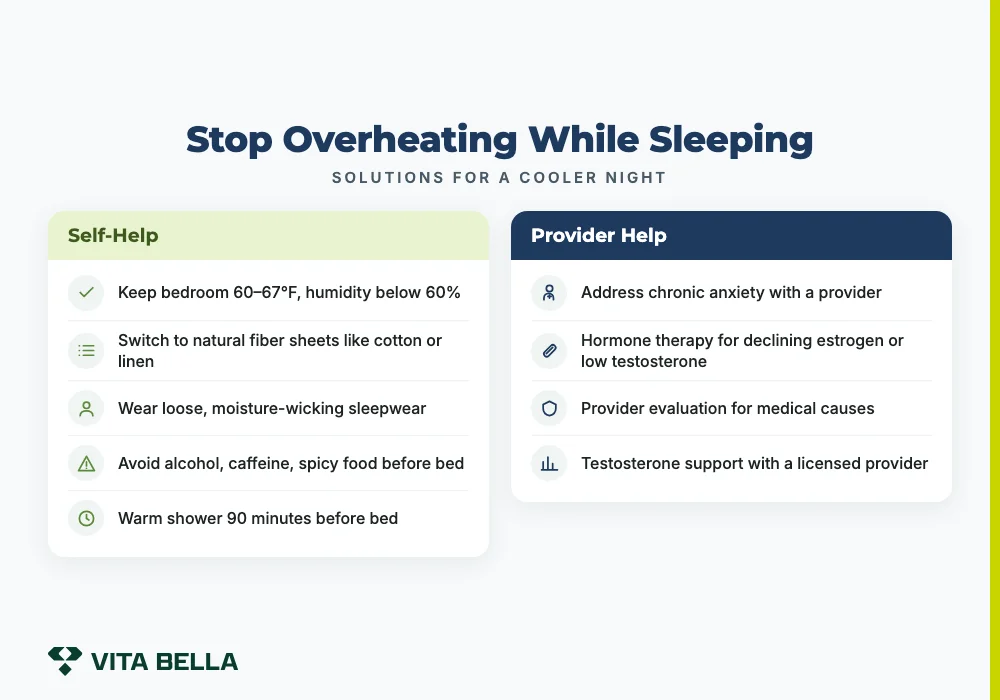
You stop getting hot while sleeping by first identifying what is causing the overheating, then applying the fix that matches that cause. Environmental triggers respond to temperature and bedding adjustments. Hormonal and medical causes need provider evaluation.
Environment and lifestyle:
- Keep the bedroom between 60–67°F and humidity below 60%
- Switch to cotton, linen, or bamboo sheets; natural fibers allow moisture and heat to escape rather than accumulate at the skin surface
- Wear loose, moisture-wicking sleepwear, or remove layers if your bedding provides enough warmth on its own
- Avoid alcohol, caffeine, and spicy food within two to three hours of bedtime
- A warm shower roughly 90 minutes before bed accelerates the natural cooling process; the temperature rise triggers a rebound drop as the body dissipates heat afterward, priming conditions for sleep onset
- Cooling pillows, mattress toppers with phase-change materials, or a bedside fan can lower the sleep surface temperature directly
Stress:
Build a consistent pre-sleep routine. Dim lights an hour before bed, limit screen exposure, and use slow breathing techniques that lower heart rate and activate the parasympathetic nervous system. If chronic anxiety is driving overheating at night, addressing it with a provider produces better results than any environmental adjustment.
Hormonal causes:
Hot while sleeping due to declining estrogen in women or low testosterone in men typically does not resolve through environment and lifestyle changes alone. The problem originates in the hypothalamic thermostat. People who pursue testosterone support or hormone therapy with a licensed provider often report improved sleep as one of the earliest changes they notice.
If overheating during sleep is accompanied by persistent fatigue, mood changes, reduced libido, brain fog, or unexplained weight shifts, that pattern together is the signal to pursue a hormonal workup rather than more equipment upgrades.
Medications:
If a prescription change preceded the onset of night sweats, raise it with your prescribing provider. Dose timing, formulation options, or alternatives may reduce the sweating without compromising the therapeutic benefit. Do not adjust or discontinue any medication independently.
When overheating during sleep warrants medical attention
Most sleeping hot remedies target the immediate environment. A subset of people need to look further.
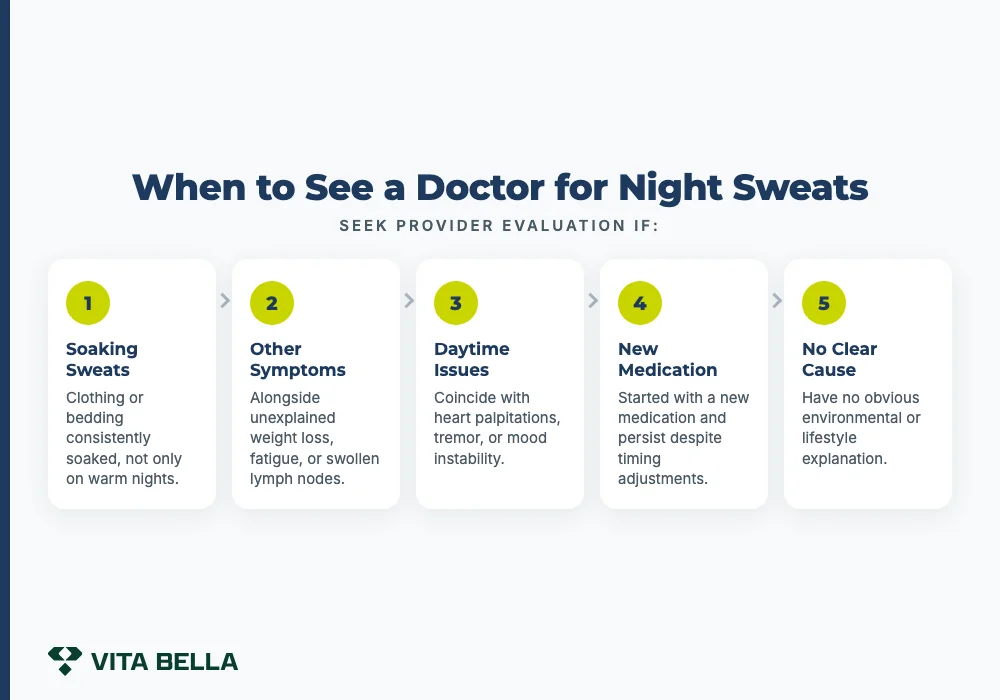
Seek a provider evaluation if night sweats:
- Soak clothing or bedding consistently, not only on warm nights
- Appear alongside unexplained weight loss, persistent fatigue, or swollen lymph nodes
- Coincide with daytime symptoms such as heart palpitations, tremor, or mood instability
- Started with a new medication and persist despite timing adjustments
- Have no obvious environmental or lifestyle explanation
The 34% prevalence documented in the Journal of Family Practice study reflects how commonly providers encounter this symptom. Infections, thyroid disorders, autoimmune conditions, and in some cases malignancies can all present with night sweats as an early sign. Early evaluation shortens the path to diagnosis and treatment.
Sleep quality connects to systemic health in ways that go beyond bedroom conditions. Research on NAD+ and metabolic function in the context of aging continues to develop, with declining NAD+ availability linked to disruptions in mitochondrial function that affect energy regulation broadly, including during sleep. This is an active research area rather than a clinical standard, but it reflects a broader principle: persistent night sweats and disrupted sleep are worth investigating systematically.
Ready to find the cause of your hot while sleeping problem?
If overheating during sleep is disrupting your rest and the standard adjustments have not helped, a licensed Vita Bella provider can clarify whether the cause is hormonal, medical, or environmental. Get Started to connect with a provider who can assess your specific symptoms, order the appropriate labs, and build a protocol that targets the actual source of the problem.
Frequently asked questions
Yes. Sleeping face-down or curled tightly limits airflow around the body and traps heat, increasing sweating. Back or side sleeping with space between limbs and the bedding allows the skin to release heat more effectively. Position is a smaller factor than room temperature or bedding choice, but it can shift the balance on borderline nights.
Yes. Spicy foods, alcohol, and caffeine consumed within a few hours of bedtime raise metabolic heat output and affect blood vessel dilation in ways that increase body temperature at night. Large meals close to bedtime extend digestion past the window when core temperature needs to fall. Moving your last meal earlier and cutting off caffeine in the early afternoon often produces a noticeable improvement within a week.
Occasional night sweats connected to room conditions or diet are common and not clinically concerning on their own. Soaking through clothing or sheets every night, without an obvious cause, is not typical and should be evaluated. Persistent night sweats can reflect hormonal imbalances, thyroid disorders, infections, or medication side effects, all of which are addressable once properly assessed by a provider.
Higher ambient temperatures reduce the temperature gradient the skin depends on to shed heat into the environment. When outdoor heat keeps your bedroom above 70°F through the night, your body cannot complete its natural cooling arc before sleep begins, making overheating during sleep more frequent and harder to address with bedding alone. Air conditioning, fans with cross-ventilation, cooling mattress pads, and lightweight bedding all help restore the conditions the body needs to cool itself.
Sources
- Baker FC et al. (2001). Sleep and 24-hour body temperatures: a comparison in young men, naturally cycling women and women taking hormonal contraceptives. The Journal of Physiology. PubMed
- Kim TW et al. (2015). The impact of sleep and circadian disturbance on hormones and metabolism. International Journal of Endocrinology. PubMed
- Okamoto-Mizuno K, Mizuno K. (2012). Effects of thermal environment on sleep and circadian rhythm. Journal of Physiological Anthropology. PubMed
- Kondo M et al. (2007). Physiological significance of cyclic changes in room temperature around dusk and dawn. Journal of Physiological Anthropology. PubMed
- Archer DF et al. (2011). Menopausal hot flushes and night sweats: where are we now? Climacteric. PubMed
- Mold JW et al. (2002). Prevalence of night sweats in primary care patients: an OKPRN and TAFP-Net collaborative study. Journal of Family Practice. PubMed
- Thompson SR. (2021). Pharmacologic treatment of antidepressant-induced sexual dysfunction. Archives of Clinical Psychiatry. PubMed
- Vgontzas AN et al. (2022). Hypothalamic-pituitary-adrenal axis response in men with chronic insomnia. Journal of Sleep Research. PubMed