


What began as a locker-room remedy has evolved into a science-backed tool. Pickle juice is now earning serious attention for its surprising effects on muscle cramps and athletic performance. For runners, endurance athletes, and extreme competitors, pickle juice has moved from gym folklore to a competitive tool. Unlike traditional electrolyte powders, pickle juice’s impact is less about fluid balance and more about how it interacts with the nervous system.
Performance optimization requires more than hydration; it requires strategy. At Vita Bella, we explore emerging and unconventional tools through evidence-based medicine. Pickle juice is one such tool, widely used yet often misunderstood. We examine what human studies reveal, how it fits into a complete electrolyte plan, and when it truly adds value. This is where science meets practical performance.
What’s in Pickle Juice that Athletes Care About?
Pickle juice is the salty, acidic liquid used to preserve pickles, typically made from water, vinegar, salt, and sometimes spices. While it does contain electrolytes such as sodium and potassium, its composition differs significantly from that of a balanced sports drink or modern electrolyte powder. Athletes lose sodium, potassium, and other minerals through sweat during intense exercise, and maintaining these levels is essential for nerve conduction, muscle contraction, and hydration.
However, research 1 shows that pickle juice does not significantly change blood sodium or potassium levels in the short term, even immediately after ingestion, indicating its effects are unlikely to come from electrolyte replenishment. Drinking larger volumes of PJ and water may be more effective at expanding the extracellular space. This sets pickle juice apart from balanced electrolyte powders (like Pick’d), which are formulated to replace lost minerals in proportions that support fluid balance and nerve/muscle function over time.
Does Pickle Juice Really Reduce Muscle Cramping?
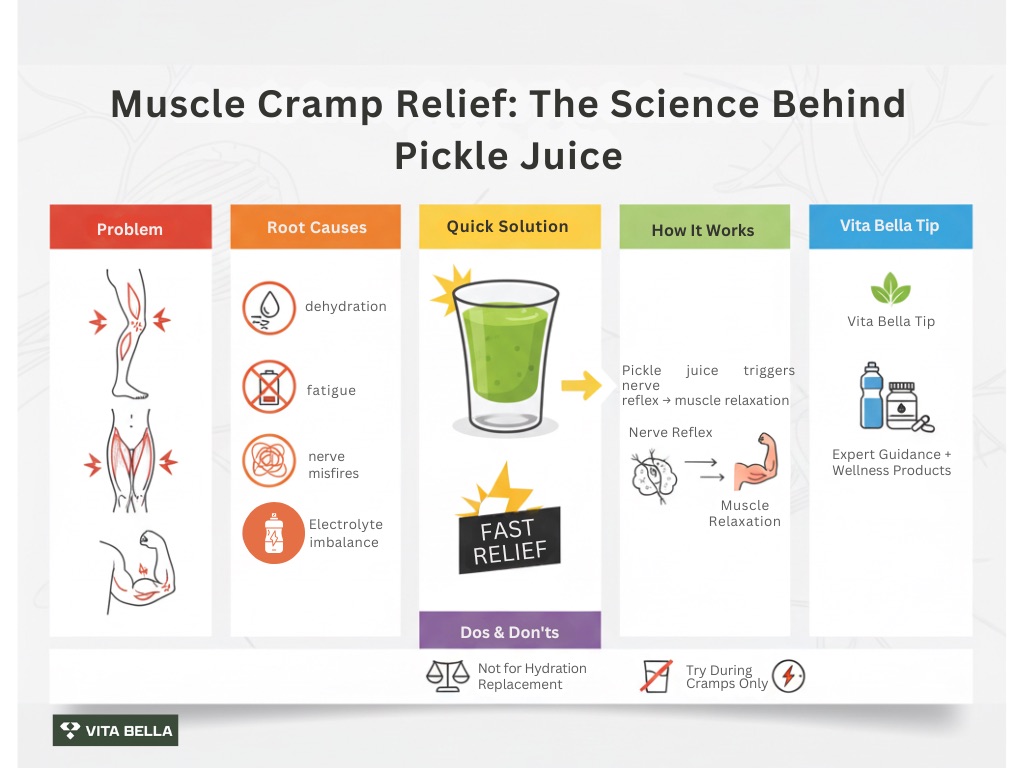
Muscle cramps are a common complaint among athletes, particularly in endurance sports and high-intensity training, and are often triggered by fatigue, neuromuscular factors, or hydration imbalances. The most cited clinical evidence 2 comes from a study where cramps were experimentally induced in hypohydrated adults.
When subjects ingested small amounts of pickle juice. The duration of cramps was significantly reduced by about 49 seconds compared with water, and before any changes in fluid or electrolyte markers could have occurred, indicating a neural mechanism rather than hydration effects.
Researchers hypothesize that the sour, acidic nature of pickle juice (largely from vinegar) triggers a rapid reflex in the mouth and throat that signals the central nervous system to reduce alpha-motor neuron firing, helping the cramping muscle relax. Additional evidence in real-world athletes supports this effect: in a randomized trial 3 involving people prone to cramps, such as those with chronic liver disease, who reported cramps stopped after pickle juice compared with water, suggesting a real symptomatic benefit.
Does Pickle Juice Improve Athletic Performance Directly?
While pickle juice may help with muscle cramps, the evidence does not show a direct improvement in performance metrics such as running time, exhaustion threshold, core temperature, or sweat loss when consumed before exercise. A controlled crossover trial 4 found that ingesting small volumes of pickle juice before a run did not improve aerobic performance or thermoregulation compared with saline or water.
Why Pickle Juice Is Still Popular Among Runners and Extreme Athletes?
Despite mixed performance findings, pickle juice remains widely discussed in athletic circles, especially for cramp management. Athletes should remember that it doesn’t meaningfully increase blood electrolyte levels quickly. It isn’t intended to replace structured hydration or electrolyte strategies for long events. High sodium intake may not be suitable for all, especially individuals with certain health conditions. This popularity is rooted in three practical reasons:
Rapid Cramp Relief: The neurological effect can reduce cramp duration faster than waiting for electrolytes to be absorbed by the digestive system.
High Sodium Content: Pickle juice can contribute to long-term fluid retention when consumed with water after workouts.
Low Barrier to Use: Pickle juice is inexpensive, widely available, and can be consumed in small amounts without much preparation.
What are the practical tips for athletes on how to Use Pickle Juice?
Athletes typically use pickle juice in small amounts, about 30–60 mL, taken quickly at the first sign of muscle cramps. It works best during or immediately after intense exercise rather than as a hydration drink. Because of its high sodium and acidity, it should be used occasionally, not sipped continuously. When incorporated thoughtfully, pickle juice can be a useful tool in an athlete’s performance and recovery toolkit:
Before Long Sessions: A small dose (about 30–60 mL) 15–30 minutes before activity may help reduce cramp risk.
During Training: Use at the first sign of cramping to quickly shorten the cramp episode.
With Hydration Plans: Combine pickle juice with water and balanced electrolyte powders rather than relying on it alone for fluid and mineral replacement.
Stop Cramps Before They Stop You
Muscle cramps can strike at the worst moments, mid-run, during an intense workout, or after a long day. Fatigue, dehydration, and sudden nerve misfires are often the real culprits behind this pain. Ignoring cramps or relying on traditional hydration can slow progress, disrupt training, and leave you frustrated. Knowing the cause is the first step to stopping them before they stop you.
Vita Bella’s experts guide you on smart strategies to prevent and manage muscle cramps. With our carefully selected supplements and personalized advice from experienced consultants, you can stay active and strong. Simple tips like using pickle juice at the right time, combined with our products, help you push through workouts without letting cramps slow you down.
Frequently asked questions
Yes, research suggests pickle juice may help stop muscle cramps by triggering nerve reflexes in the mouth and throat, rather than by rehydration. The strong acidic and salty taste can rapidly signal the nervous system, reducing excessive muscle firing and providing relief faster than fluids alone in some athletes. This effect can occur within seconds, making it useful during acute cramp episodes.
No, pickle juice is not an effective hydration drink because it contains very little fluid and no meaningful carbohydrates. Although it is high in sodium, its primary role is not to replace fluid. Athletes should rely on water or sports drinks for hydration, using pickle juice only as a cramp-management aid. It is best viewed as a quick intervention, not a substitute for proper hydration and electrolyte balance.
Yes, in some individuals, pickle juice may cause stomach irritation, nausea, or acid reflux due to its high acidity. Its sodium content can also be problematic if consumed excessively, especially for people with hypertension. Moderation is key; it should not be used frequently or in large quantities. Individuals with sensitive digestion should use caution or avoid it altogether.
No, pickle juice does not work the same way for everyone, and not all muscle cramps have the same cause. Some cramps are related to fatigue, electrolyte imbalance, or training load. Athletes should treat pickle juice as a situational tool, not a universal solution, within a broader nutrition and hydration strategy. Individual response varies, so trial and personal experience matter.
References:
Peikert, J., Miller, K. C., Albrecht, J., Tucker, J., & Deal, J. (2014). Pre‑exercise ingestion of pickle juice, hypertonic saline, or water and aerobic performance and thermoregulation. Journal of Athletic Training, 49(2), 204–209. https://doi.org/10.4085/1062‑6050‑49.2.11
Miller, K. C., Mack, G. W., Knight, K. L., Hopkins, J. T., Draper, D. O., Fields, P. J., & Hunter, I. (2010). Reflex inhibition of electrically induced muscle cramps in hypohydrated humans. Medicine & Science in Sports & Exercise, 42(5), 953–961. https://doi.org/10.1249/MSS.0b013e3181c0647e
Tapper, E. B., Salim, N., Baki, J., Zhao, Z., Sundaram, V., Patwardhan, V., & Nikirk, S. J. (2022). Pickle juice intervention for cirrhotic cramps reduction: The PICCLES randomized controlled trial. The American Journal of Gastroenterology, 117(6), 895–901. https://doi.org/10.14309/ajg.0000000000001781
Peikert, J., Miller, K. C., Albrecht, J., Tucker, J., & Deal, J. (2014). Pre‑exercise ingestion of pickle juice, hypertonic saline, or water and aerobic performance and thermoregulation. Journal of Athletic Training, 49(2), 204–209. https://doi.org/10.4085/1062‑6050‑49.2.11